

(minimum 4 person)
Price in USD: USD 90,-/person
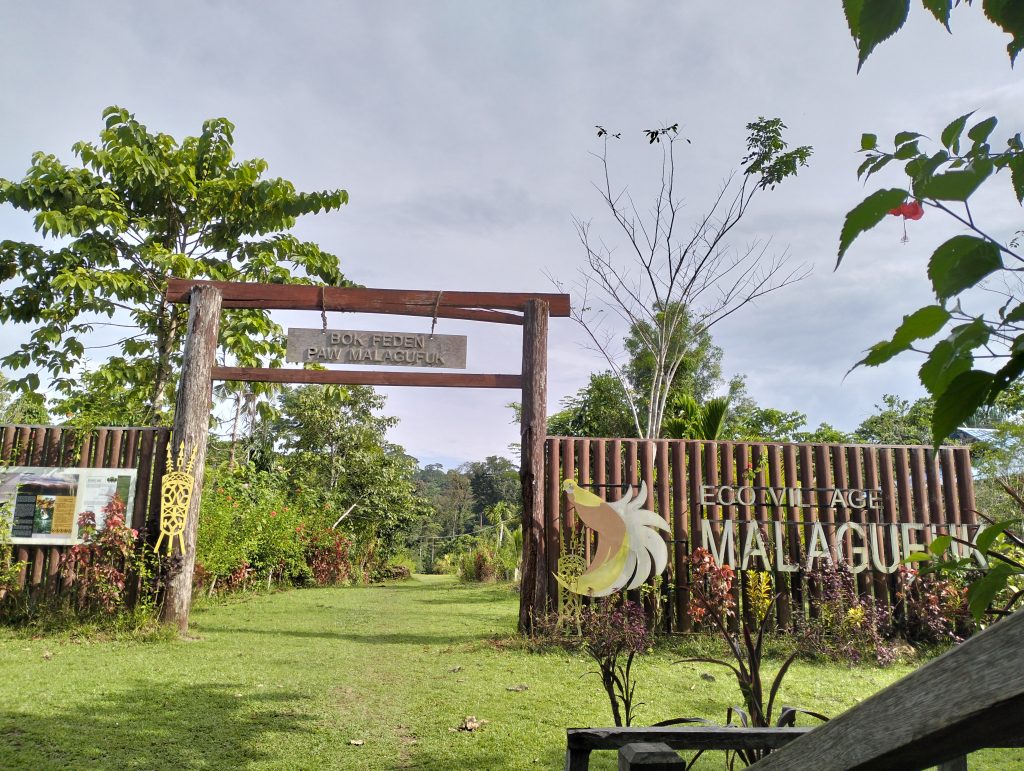
Malagufuk Village
Malagufuk, attributed as an ecotourism village, is frequently visited by both domestic and international tourists. The village which is located at Makbon District, Sorong Regency in West Papua still has dense forests with plentiful fauna.
The tourists usually came and stayed to watch various beautiful local papua's birds, cenderawasih bird dancing also called 'the bird of paradise', Indonesian native kangaroo or locally called lau-lau, Papuan rangkong bird or known as julang Papua, and cassowary. The community warmly welcome the tourists. However, they still have language barrier particularly when they host foreign guests.
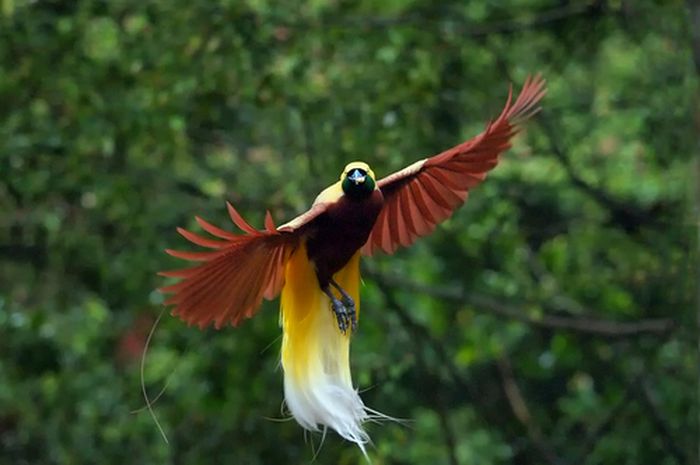
Lesser Birds of Paradise
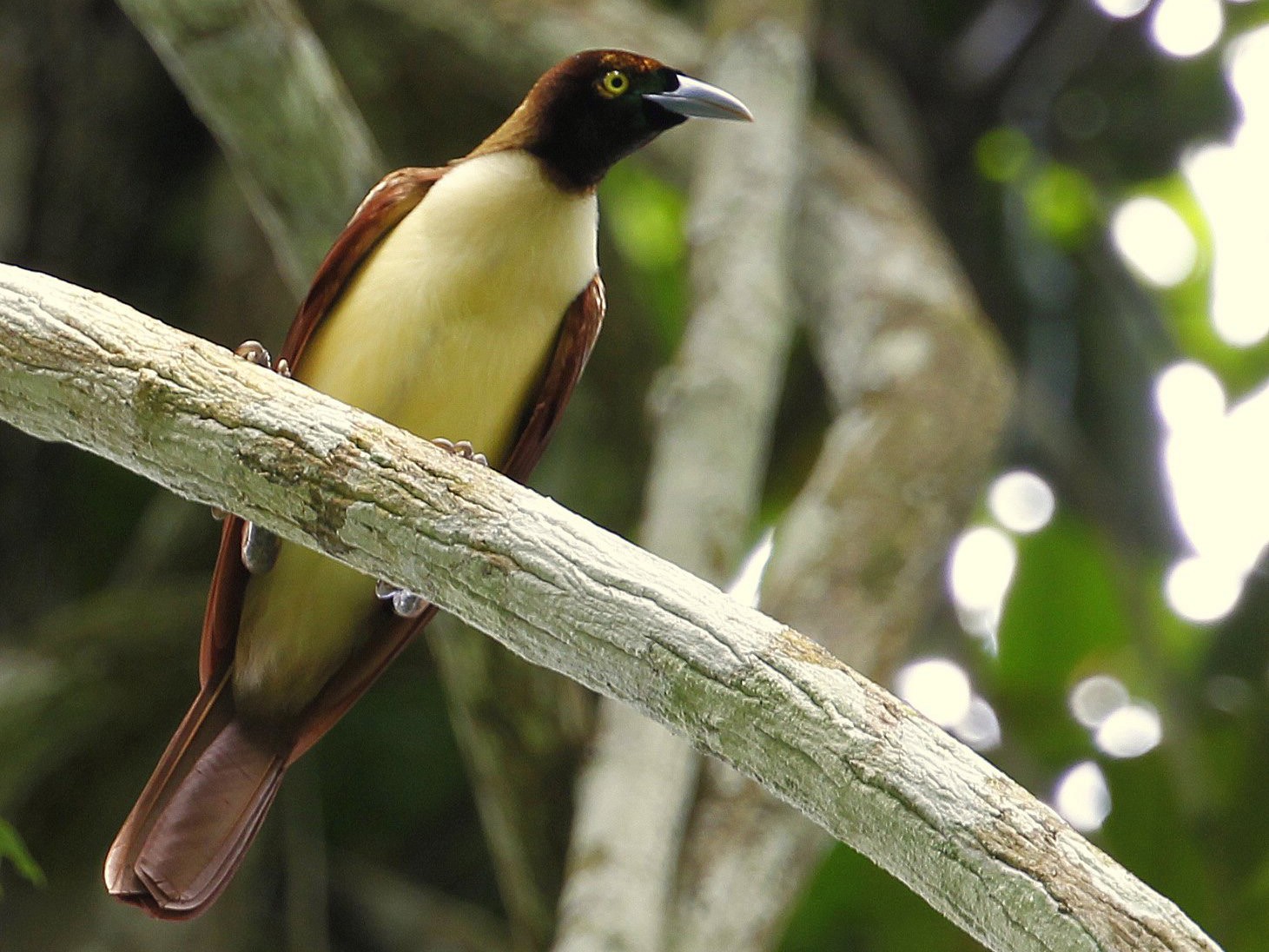
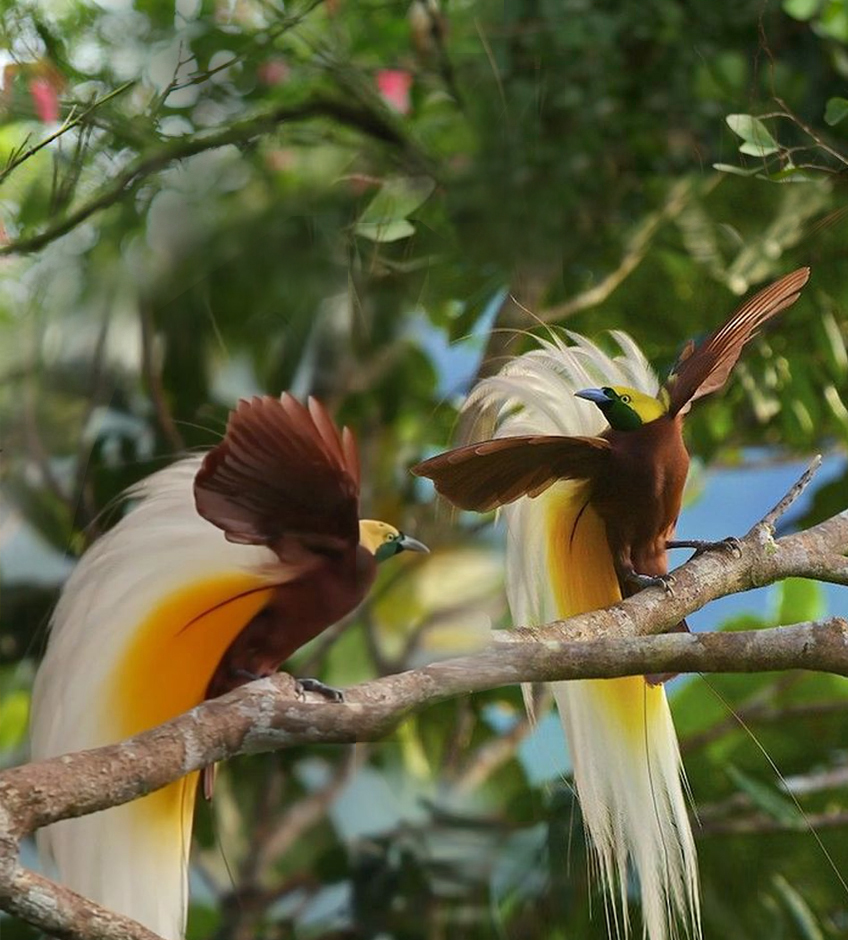
A large bird of lowland and foothill forest and edge. Both sexes have yellow back and yellow eye. Male has a chestnut breast and white and yellow plumes which he raises above his back during his display, in which he flaps his chestnut wings. The male is distinguished from Greater by his yellow back and Emperor by his brown chest. Females distinguished from other species by their white underparts and black hood. Male gives a typical, repeated, nasal squawk.
As its name, Lesser Birds of Paradise is a bird that is so beautiful like its come from heaven. Although still on “lower risk“ status, their number keep decreasing lately. The reason is due to loss of habitat, and being hunt for fulfill ceremonial needs of the local tribal population. Lesser Birds of Paradise (Paradisaea minor) are known to live in the lowlands to mountainous forest areas in eastern Indonesia. They inhabits area that have high stands and rather dense branches and there are several types of vines around them.
This beautiful bird has a various sizes, with length 32 cm and weighs approximately 183 – 300 g. It mostly resembles the larger greater bird-of-paradise. The male of that species has a dark chest, whereas the female is entirely brown (no whitish underparts).
Known for their attractive appearance, usually the feathers of this bird are brightly colored. It is a combination of black, blue, yellow, red, brown, purple, green and white.
The adult male of nominate race has iridescent emerald-green lores, forehead, ear-coverts, malar area, chin and throat. The rest of the head is pale yellow with silver gloss extending into nape and mantle, and finally blending into the mid-brown back and upperwing-coverts. The shoulder bar is pale yellow, as the outer edges of the greater coverts. The remaining upperparts, upperwing flight feathers and tail, are paler brown with maroon wash on back, rump and uppertail-coverts. On the tail, the central pair of rectrices is well elongated and dark brown. They are webbed only at base, and then reduced to fine wires.
On the underparts, the breast is dark maroon-brown, turning paler on belly, thighs and undertail-coverts. The central tail-coverts are fluffy and longer. The flank feathers are very elongated. These are filaments with yellow base slightly streaked maroon and fading to whitish and buff-white towards the tip. The strong bill is pale bluish-grey and the nostrils are covered by feathers. The eyes are yellow. Legs and feet are pinkish-grey.
The female is smaller. She has shorter central rectrices, but narrower and more pointed than the other tail feathers. The head is dark brown, turning paler buff on nape and mantle. Rest of upperparts varies from mid-brown to dark brown. On the underparts, chin and throat are dark brown. Rest of underparts is white, washed pale pinkish-brown on flanks and undertail-coverts. Thighs are brown. The immature is similar to adult female. The young birds need about 8-9 years to acquire the full adult plumage.
During the breeding season, some fights and chases may occur between males at territory boundaries. These fights are often necessary in order to maintain a hierarchy. Once established, aggressive encounters are reduced and the females do not suffer excessive harassment by younger males. The females usually prefer centrally located males which are more dominant and older.
The copulating pair is “protected” by subdominant and younger males perched around them, and more exposed to potential predation.
The displays start when one or several females approach the lek. The usual phases are first, the convergence display, then the static display and finally the copulatory display. The latter includes several postures and movements such as wings held in front of the body while the flank feathers are thrown over the back. Then, the male hops along the perch with raised or lowered bill on each
trip. It also dances, and all these postures enhance the beautiful long flank feathers and the head pattern. These displays are
accompanied by calls. Up to 12 adult males may perch in single lek tree.
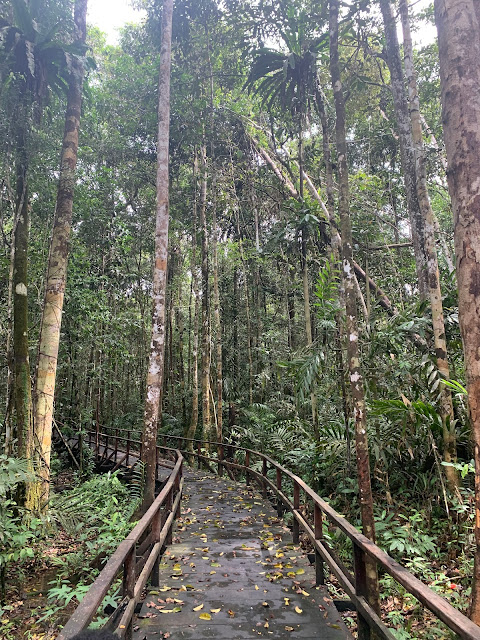
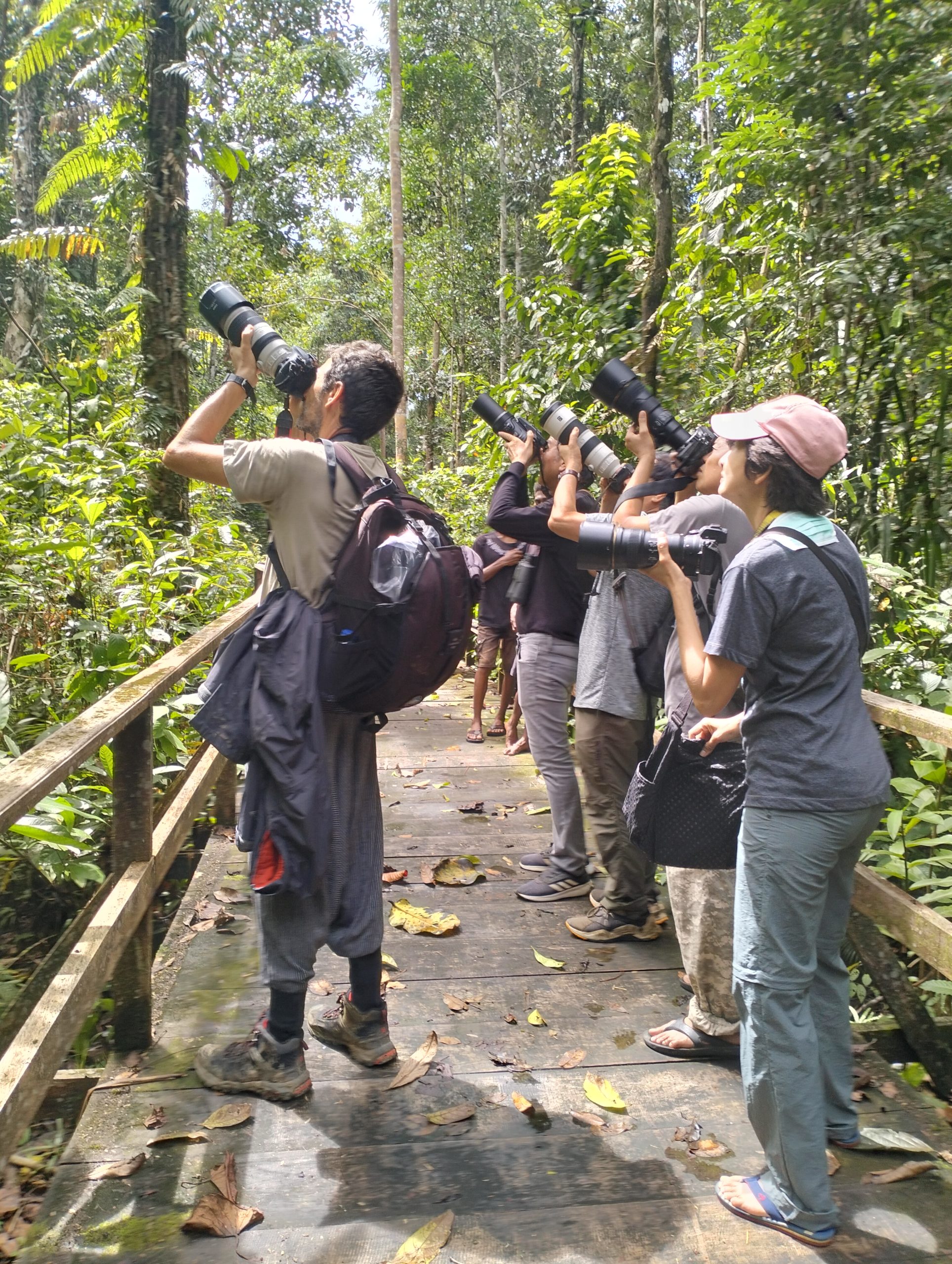
- Malagufuk
- Forest.
- Birds of Paradise area
Fitur Calendar Trip untuk saat ini masih belum aktif
Day 1: - Pickup from SorongView this post on Instagram




PERKENALKAN
TANAH KELAHIRANMU
PADA DUNIA…